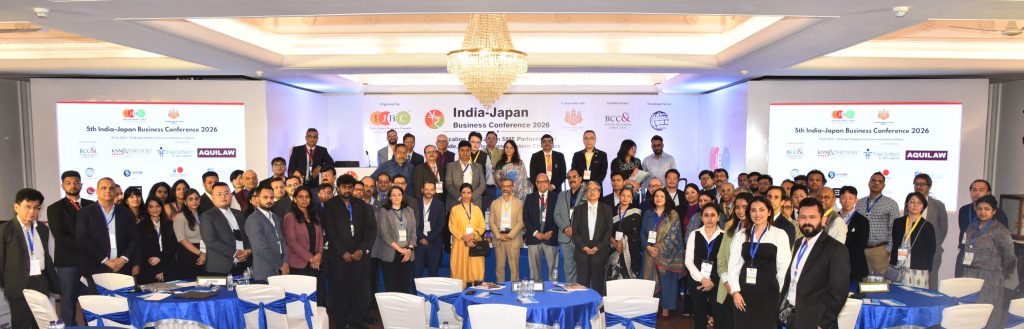
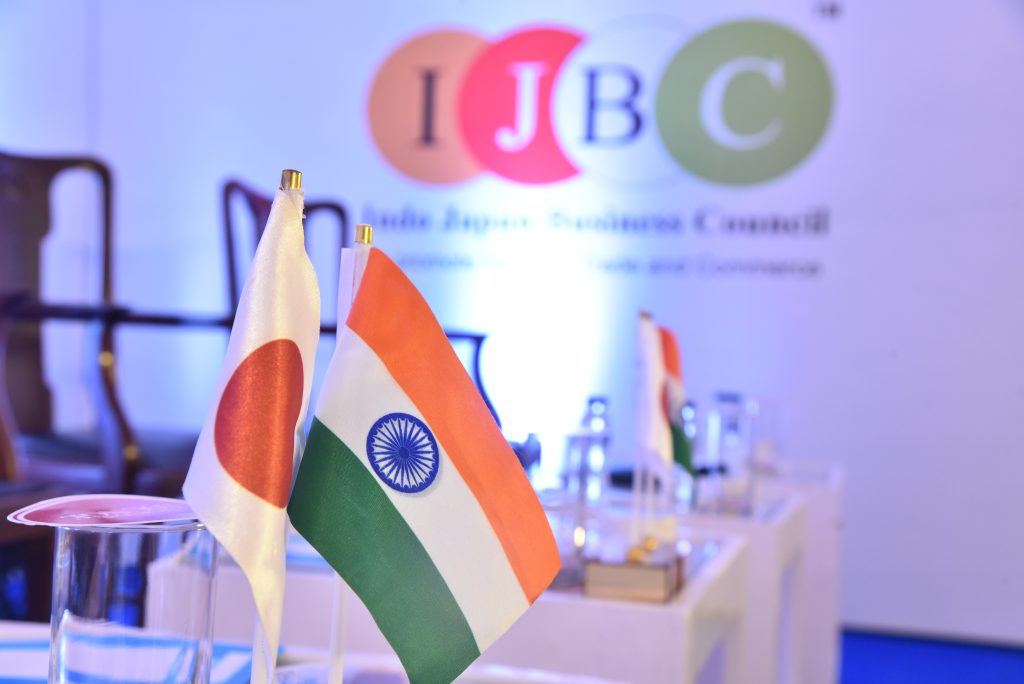
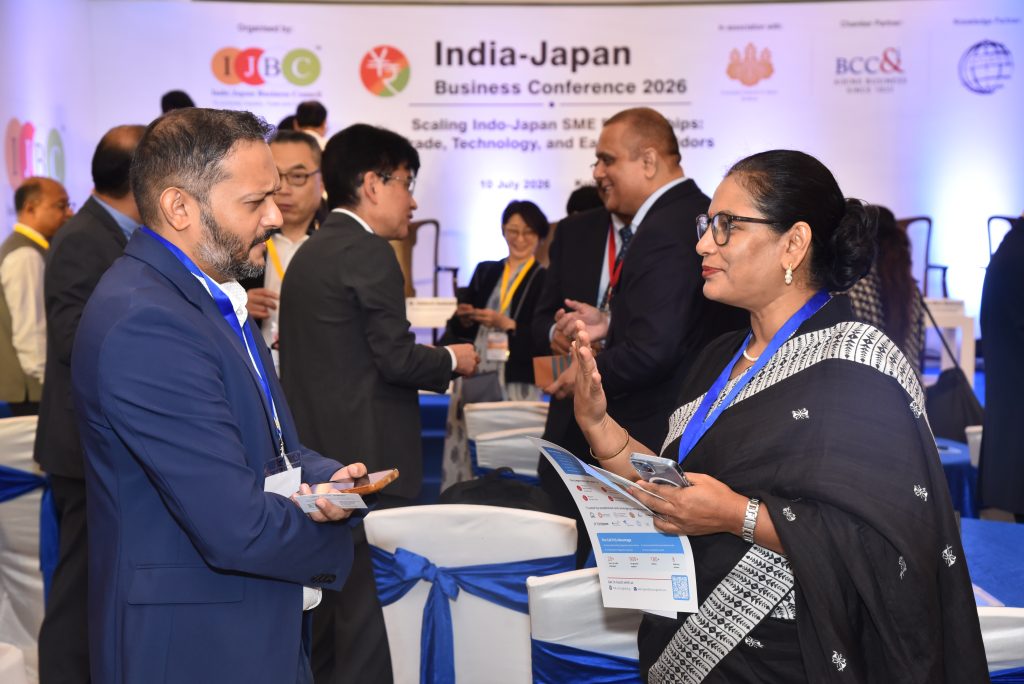
I had the privilege of attending the 5th edition of the India Japan Business Conference at the Bengal Chamber of Commerce and Industry in Kolkata on July 10, 2026. The room brought together diplomats, public institutions, business leaders, academics, and advisers, and the event offered an excellent opportunity to learn how India’s MSMEs were shaping the India-Japan business landscape and what opportunities could be mined.
This article borrows heavily from the official conference report shared by the office of the Indo-Japan Business Council (IJBC), the organizers of the India Japan Business Conference. I’m grateful to the IJBC for organizing a wonderful event that showcased the potential of the eastern corridor of India and for summarizing the event for the benefit of the participants.
Beyond goodwill
India and Japan have a long history. The relationship already rests on strategic trust, decades of infrastructure cooperation, and substantial investment. The challenge now is to make that relationship work at the enterprise level, especially for companies that do not have the resources of a multinational corporation.
According to India’s Economic Survey 2025–26, MSMEs account for approximately 31.1% of India’s GDP and 48.58% of its exports. In Japan, 3.36 million SMEs represent 99.7% of all companies, according to SMRJ. If the next phase of India–Japan cooperation is meant to be deeper and more widely distributed, smaller businesses need to be at the forefront.
Seeing Eastern India differently
Kolkata was not simply a convenient host city for the event. Eastern India is too often described as a collection of separate states or as an underdeveloped market waiting for attention. The conference offered a more compelling way to see it: as a connected commercial geography.
Kolkata’s port and service economy, Odisha’s industrial base, Assam’s developing semiconductor ecosystem, the resources and capabilities of the North-East, and the proximity of Bangladesh and other neighboring markets offer tremendous logistical and strategic advantages.
The opportunities discussed ranged from agricultural logistics and food processing to clean energy, medical devices, digital services, and disaster resilience. What interested me most was not the length of that list, but the idea that Kolkata could function as a bridge: connecting Japanese capability with Eastern Indian partners and, in suitable sectors, with a wider South Asian market.
The most persuasive example came from the ground
The Kawasaki Solar Warehousing case made the day’s themes tangible. A century-old Japanese family business made its first overseas investment in Singur, West Bengal, establishing solar-powered cold storage. Once it became clear that a storage facility alone would not solve the farmer’s problem, the setup evolved into a wider farm-to-market system covering collection, grading, packaging, and traceability.
The venture succeeded not by copying a Japanese model exactly, but by combining patient Japanese capital and management practices with local training and direct observation. The Japanese principle of gemba – understanding conditions firsthand through observation onsite – was adapted to rural India. The result was co-creation rather than one-way technology transfer.
I heard the same logic in very different sessions. PADECO spoke about adapting infrastructure and social technology with Indian partners. A Kyoto craft initiative proposed market research and limited test marketing before a wider launch. The resilience discussion reminded us that a company’s recovery depends on its suppliers, infrastructure, and community. Each example began with a practical problem, not an overarching ambition to enter India.
Affordable excellence
Indian frugal innovation and Japanese quality are sometimes presented as opposing philosophies. The discussion suggested the opposite. Frugality is the efficient use of resources to achieve a reliable result. Japanese quality is not about adding cost for its own sake; it is about safety, consistency, and disciplined processes.
Indian speed and prototyping can help teams reach an initial solution quickly. Japanese kaizen and standardization can then stabilize and improve it. Together, these strengths can produce durable and affordable products for the Global South in electric mobility, healthcare devices, digital public infrastructure, and other domains. The important condition is that quality and safety requirements are defined before cost is optimized.
What happens next matters most
By the end of the day, several possible next steps had surfaced: a digital business matching mechanism, Japan readiness training for Indian suppliers, SME resilience programs, better cross-border logistics with Bangladesh, and sector-specific pilots.
Events like this can introduce people and offer a forum, but they do not create commercial outcomes by themselves. IJBC has said it will follow up selected enquiries, support suitable introductions, and route relevant companies through its SME Help Desk.
Once business cards and final pleasantries were exchanged at the end of the day, I made my way to the Armenian Ghat, the only sightseeing opportunity I could afford given my schedule and Kolkata’s traffic. The walk gave me time to reflect on the takeaways from the conference. India and Japan already have complementary strengths. Eastern India offers a credible regional platform. Smaller companies have the expertise to turn strategic priorities into products, services, and resilient supply chains. What they need are clearer pathways to one another. If those pathways can be built, moving from dialogue to delivery will be more than a conference theme. It will describe how the relationship grows.